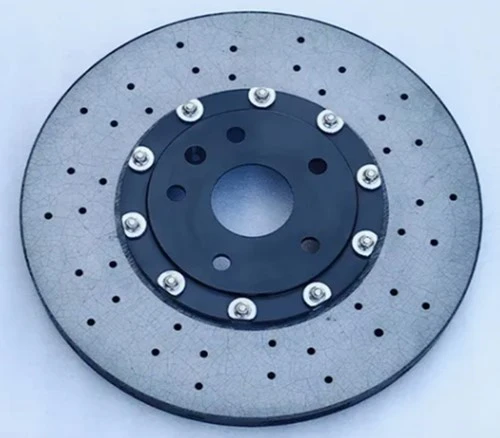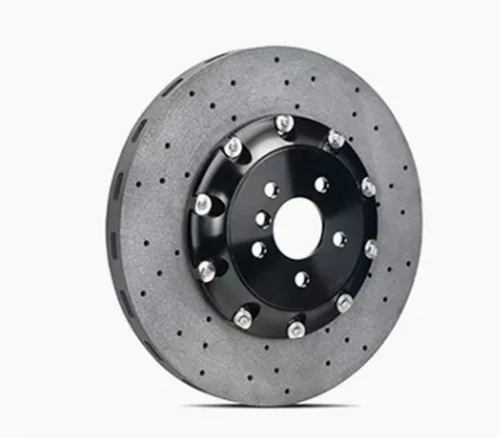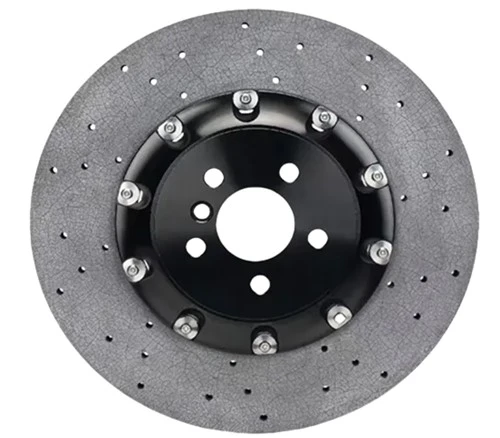

The mainstream manufacturing processes for carbon-ceramic brake discs include Chemical Vapor Infiltration (CVI), Polymer Impregnation and Pyrolysis (PIP), and Liquid Silicon Infiltration (LSI). In actual production, common combinations include CVI+LSI or PIP+LSI.
Carbon-ceramic brake discs are primarily categorized by the morphology of their reinforcement materials into short-fiber discs and long-fiber discs. The short-fiber process (also known as the powder compression process) involves blending short carbon fibers with resin to create a powder, which is then molded and pressed at high temperatures; while this method offers high raw material utilization, short production cycles, and low costs, the resulting products exhibit mediocre structural-mechanical properties-specifically lower strength and toughness-making them prone to chipping and breakage. The long-fiber process (also known as the needle-punched preform plus CVI process) utilizes continuous long fibers; a fiber mat is laid between two layers of carbon fiber fabric and consolidated via needle-punching, followed by cutting to form a three-dimensional annular preform. Although this method yields products with superior strength and toughness due to the improved carbon fiber structure, the carbonization stage requires repeated deposition cycles, resulting in longer production times; additionally, cutting the preforms generates scrap material, thereby increasing costs.
Key manufacturing steps typically include preform preparation (short-fiber mixing/compression or long-fiber needle-punching), drilling, high-temperature pyrolysis (baking at approximately 1800°C for 48 hours to burn off impurities), silicon infiltration (absorbing liquid silicon into the carbon fiber blank at approximately 3000°C to form silicon carbide), anti-oxidation treatment (to prevent carbon oxidation at high temperatures), and subsequent processing such as precision grinding.