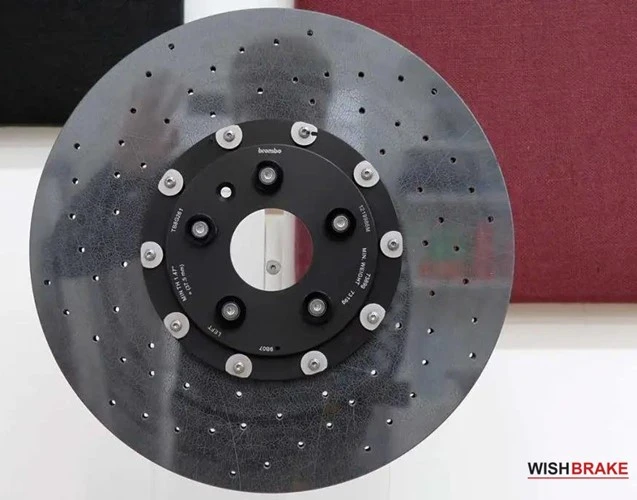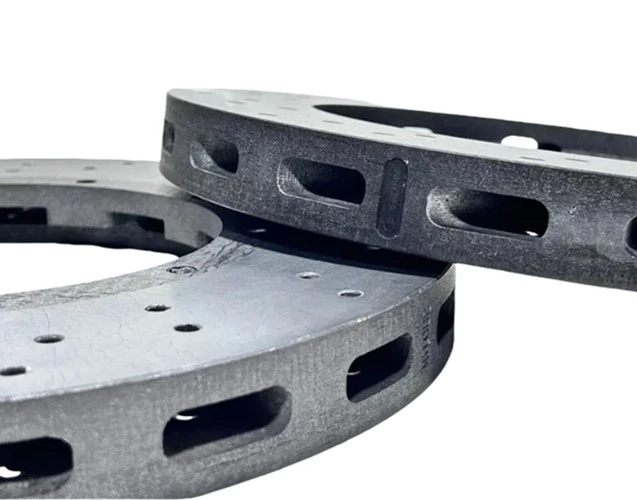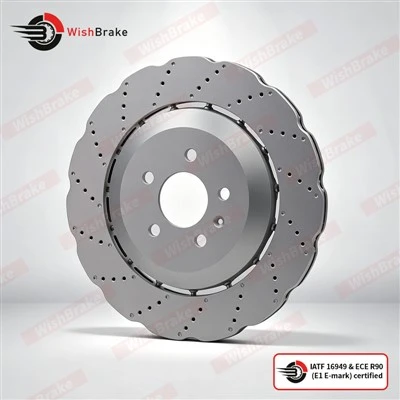
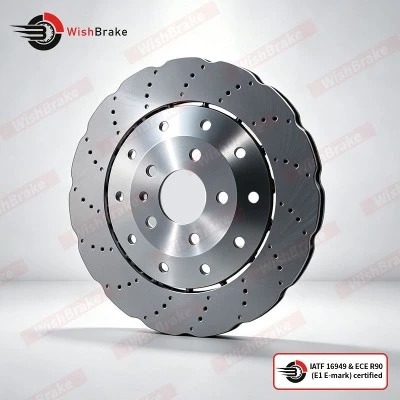
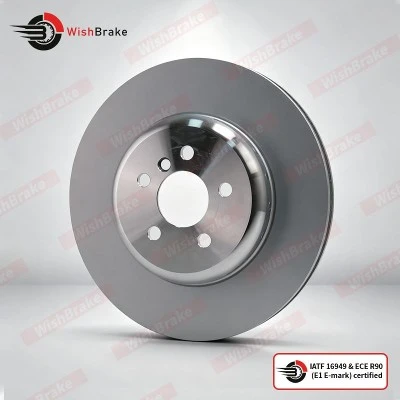
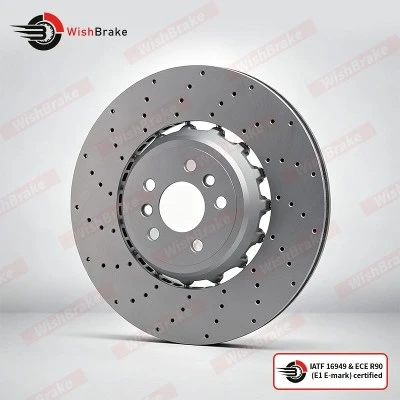
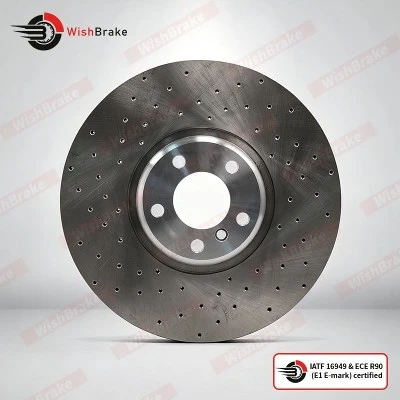
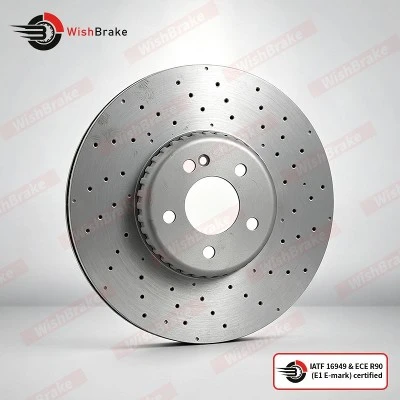
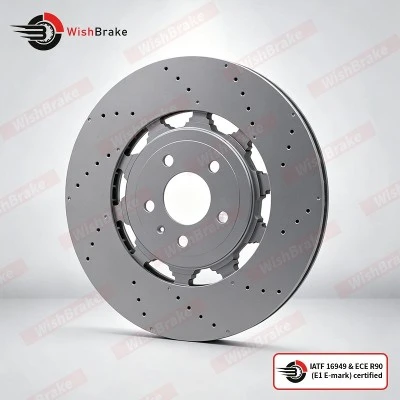
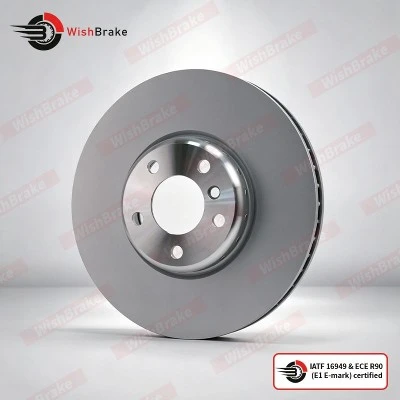
There are three main types of brake materials currently in use: metal-matrix brake discs, carbon-carbon brake discs, and carbon-ceramic brake discs. Carbon-ceramic discs are primarily categorized based on the form of their reinforcing fibers into short-fiber and long-fiber (continuous-fiber) variants. Short-fiber discs are produced by compression molding a mixture of chopped carbon fibers and resin powder; while this method offers a short production cycle and lower costs, the resulting mechanical properties are only moderate. Long-fiber discs are manufactured by needle-punching continuous carbon fiber fabrics or mesh mats to create a three-dimensional preform, followed by densification processes such as chemical vapor deposition; these discs exhibit superior strength and toughness and represent the mainstream technical approach in China. Additionally, based on surface treatment, they can be classified into discs with or without ceramic coatings, as coatings enhance oxidation resistance and aesthetic appeal.
Carbon-ceramic brake discs combine the physical properties of carbon fiber and polycrystalline silicon carbide. C/SiC materials exhibit an elongation at break ranging from 0.1% to 0.3%, a relatively high value for ceramic materials. Furthermore, characteristics such as low weight, excellent hardness, stability under high-pressure and high-temperature conditions, thermal shock resistance, and shear fracture toughness contribute to extending the service life of the brake discs and mitigating potential issues arising under load.