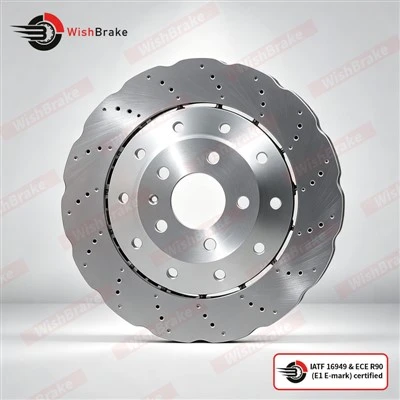
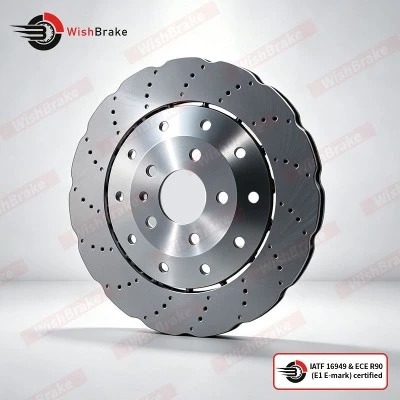
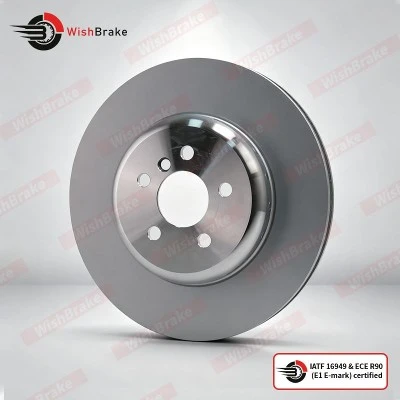
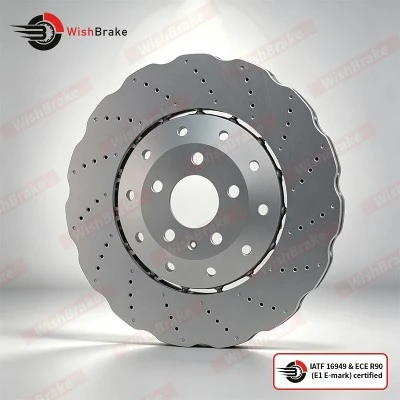
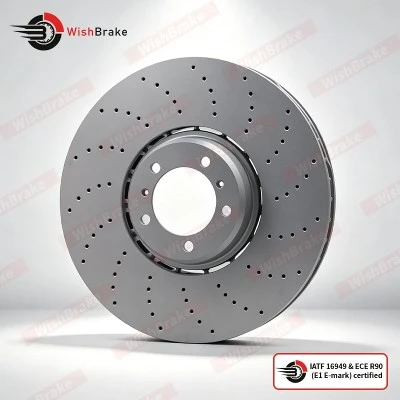
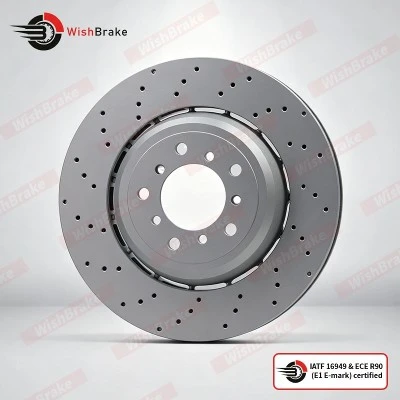
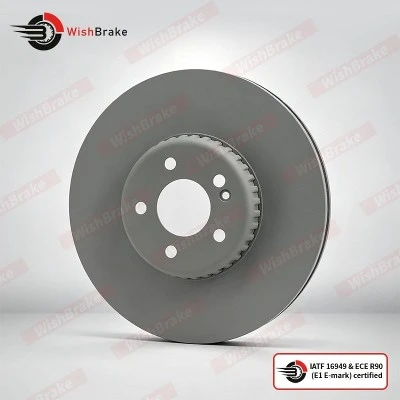
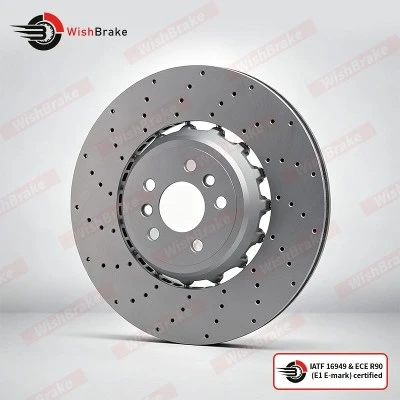
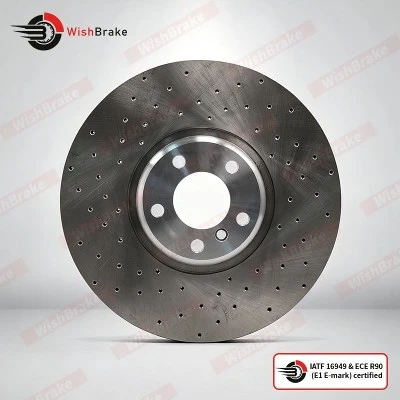
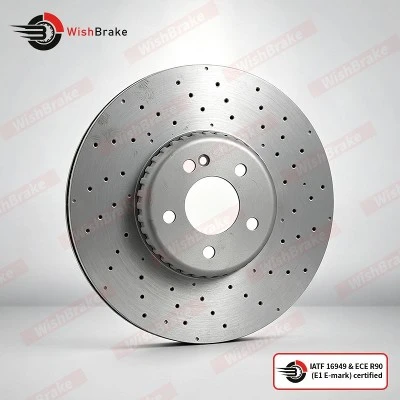
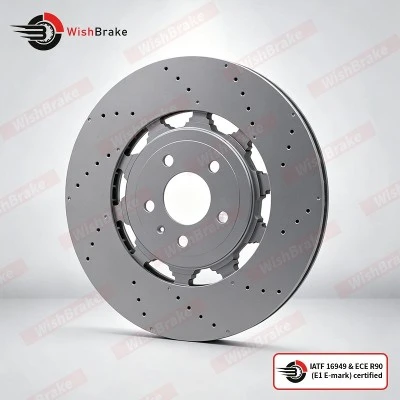
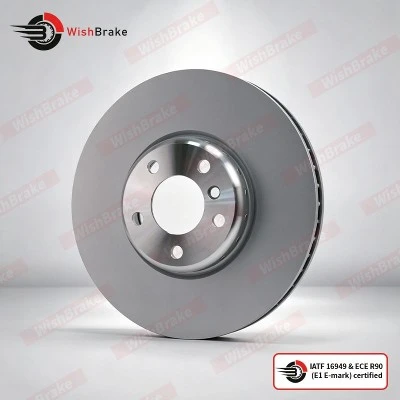
Grooving appearing only on the front or only on the rear brake discs is often caused by driving habits or an uneven distribution of braking force between the front and rear. If a groove appears on just one disc while the others remain normal, the cause is usually related to the material itself or external factors. So, how should we deal with grooved brake discs?
When brake pads reach the end of their service life, small metal protrusions (approximately 2–3 mm in size) appear at their ends; this thickness represents the wear limit. Once the pad wears down to this point, it requires replacement. At this stage, the metal protrusions begin to rub against the rotating brake disc, causing damage to the disc surface.

Grooves on brake discs can be caused by the following factors:
1. **Hard brake pads or excessive wear:** Exposed metal components within the pad rub directly against the disc, creating grooves. This is usually accompanied by a harsh, screeching sound.
2. **Foreign debris:** Particles such as sand or metal fragments get trapped between the pad and the disc, scoring the surface and creating grooves.
3. **Brake binding (sticking):** Constant contact between the pad and the disc over an extended period leads to groove formation.
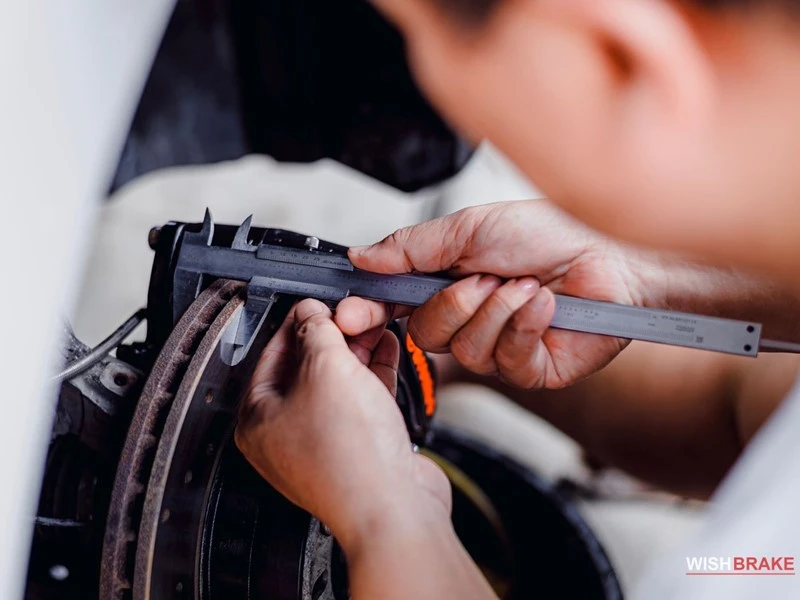
4. **Normal wear:** Brake discs have a maximum wear limit (typically 2 mm); once this limit is reached, the disc must be replaced.
Failure to address this issue promptly causes the grooves to deepen, eventually leading to weak braking, uneven friction, brake shudder, and a scraping noise, all of which result in reduced braking performance.