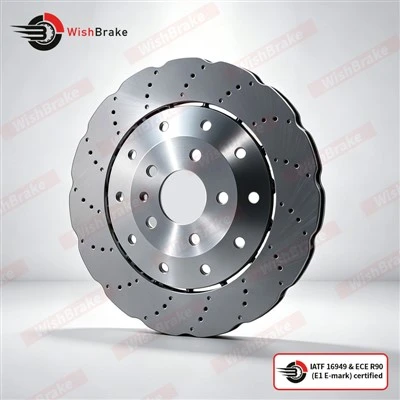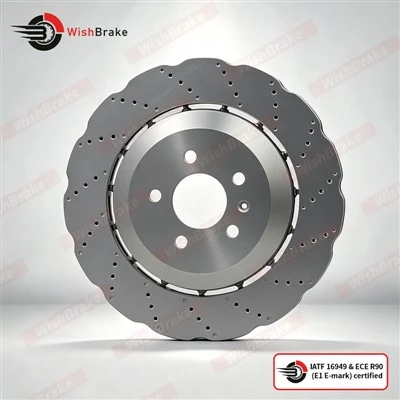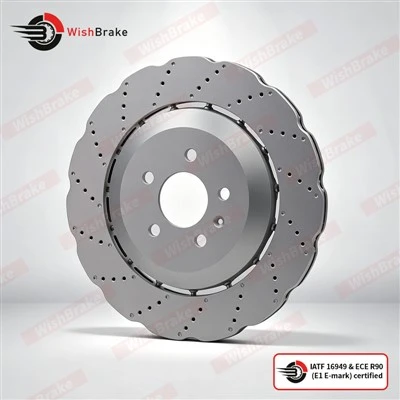

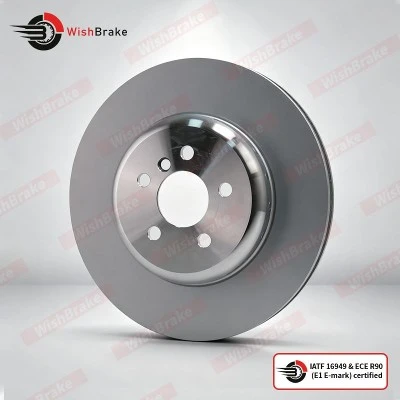
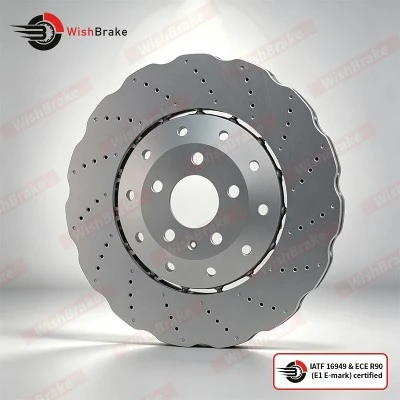
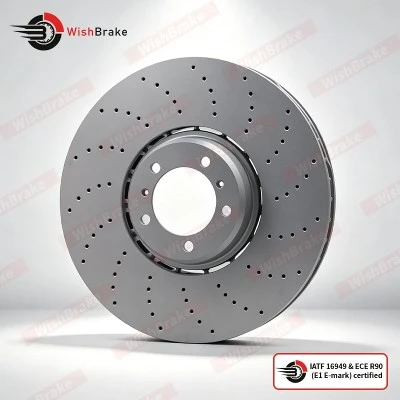
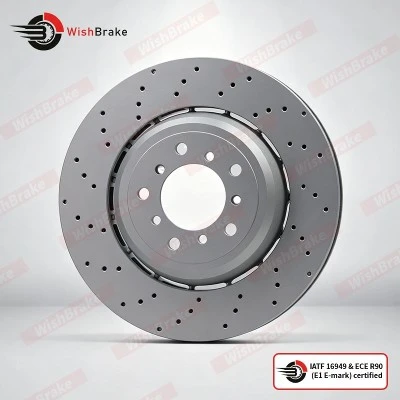
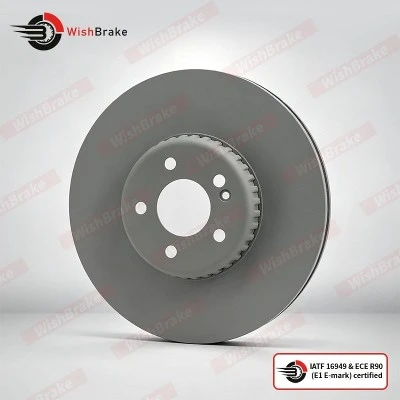
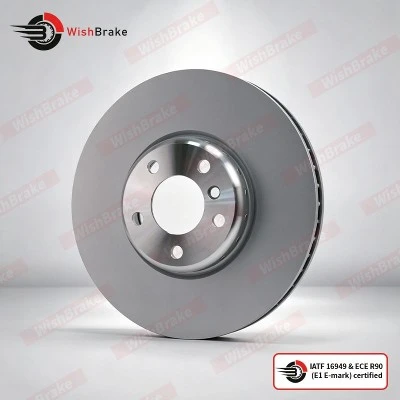

With the development of the automotive industry, cars have become commonplace in households everywhere. Naturally, braking performance is a primary concern for owners. The transition from drum brakes to disc brakes highlighted the latter's distinct advantages: superior performance and rapid heat dissipation. Today, most vehicles utilize disc brakes. So, how often should the brake discs be replaced?
While some suggest replacing front discs at around 50,000 kilometers and rear discs at 100,000 kilometers, there is no universal standard; replacement intervals depend heavily on driving habits and conditions. Frequent braking-such as in city traffic or mountainous terrain-accelerates wear, necessitating earlier replacement, whereas highway driving or infrequent braking extends their lifespan.
How can you tell if a brake disc needs replacing?
First, visually inspect the disc surface. Deep grooves (exceeding 1.5 mm) indicate a likely need for replacement. Such grooves are often caused by foreign debris trapped between the disc and the pad, or by brake pads wearing down to the metal backing, which then grinds against the disc. Second, check for wear limit indicators (usually small grooves or notches); if these marks have worn away, the disc should be replaced. Third, if you hear a sharp, grating noise during braking and experience poor stopping power-even after replacing the brake pads-the disc may be at fault. While resurfacing (machining) the disc is an option, the total material removed from both sides must not exceed 3 mm; otherwise, replacement is mandatory. Fourth, if you experience a "bouncing" sensation or vibration while braking, check the disc for warping; a warped disc must be replaced. Fifth, avoid washing the car immediately after driving, as the sudden contact of cold water with a hot brake disc can cause deformation due to thermal shock, damaging the disc. Sixth, some vehicle dashboards feature a brake pad wear indicator light; generally, the discs should be inspected whenever the brake pads are replaced. Braking systems are critical to safety, so never be negligent in their maintenance. Some people replace their brake discs after just tens of thousands of kilometers, while others don't change them even when they are nearing the end of their service life. The key lies in the various factors that cause brake disc wear; don't let repair shops make it sound overly mysterious-simply focus on the points mentioned above, and you can drive with peace of mind regarding your brakes.