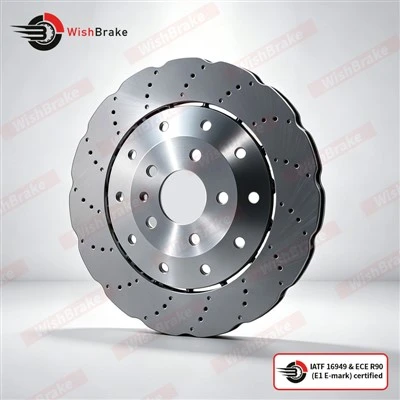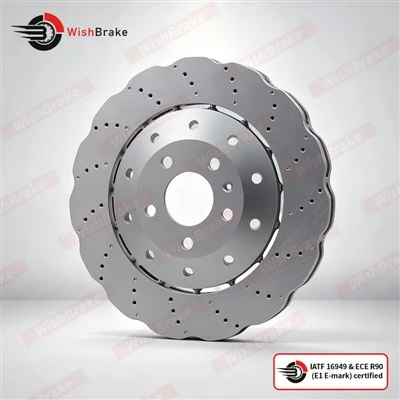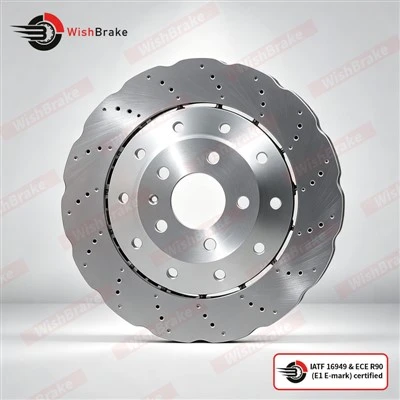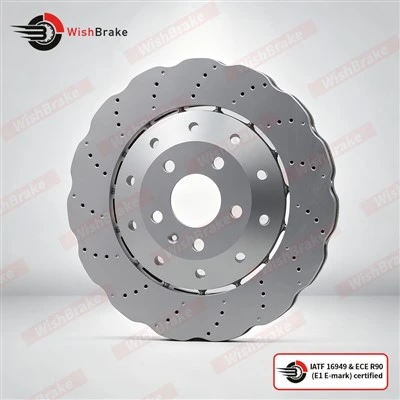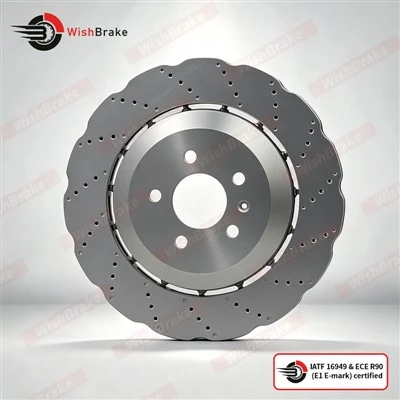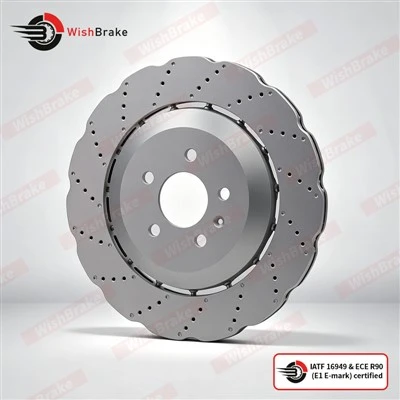

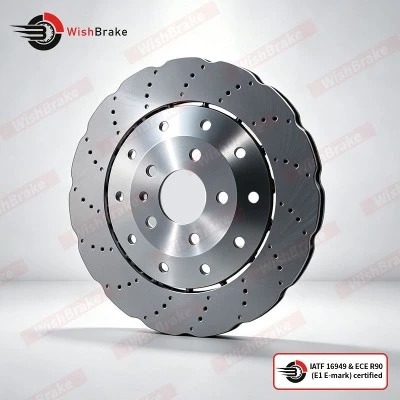
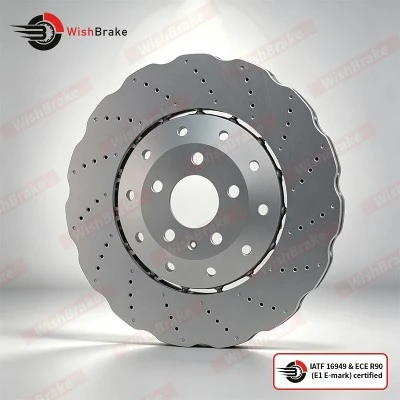
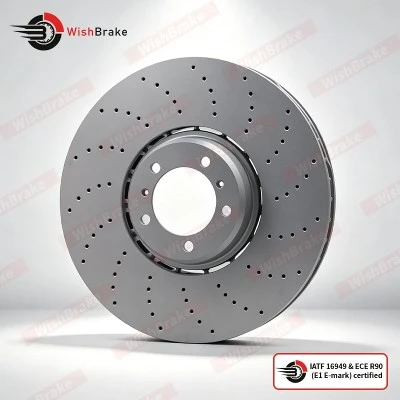
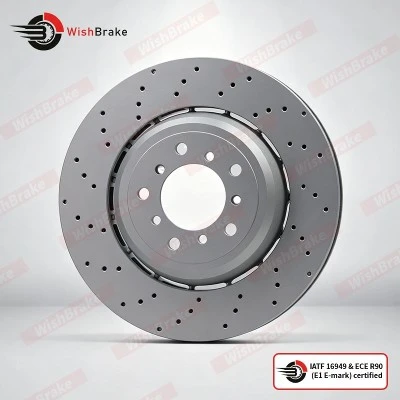
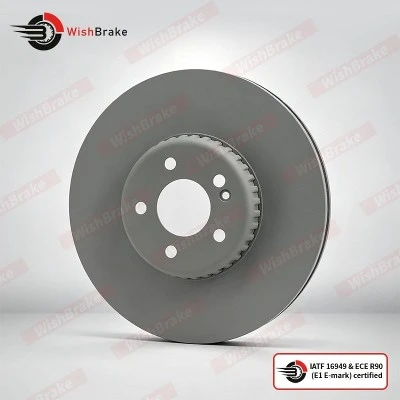
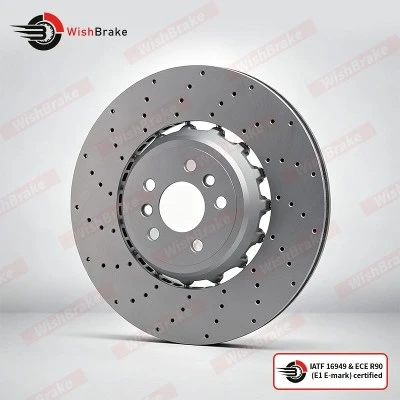
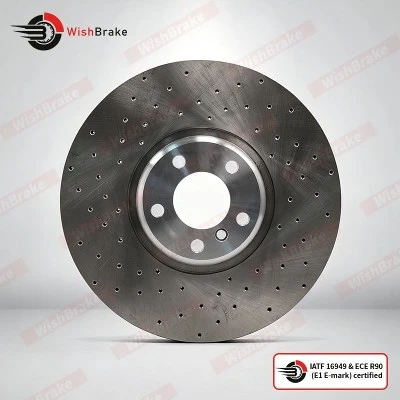
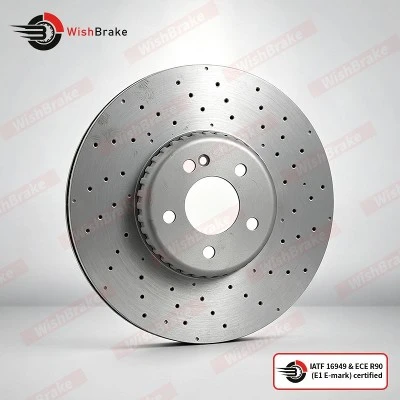
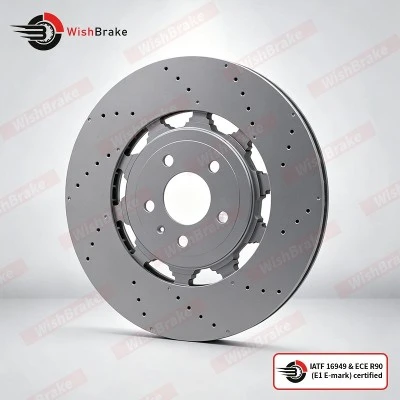
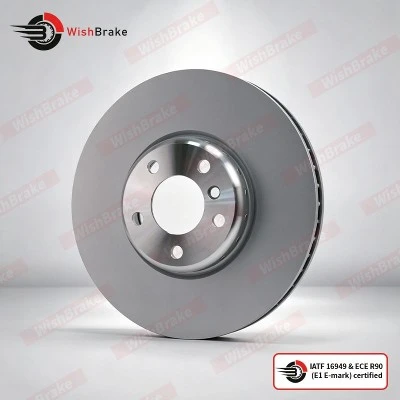
Carbon-ceramic brake discs are manufactured using carbon fiber-reinforced silicon carbide (C/SiC) composites. The matrix primarily consists of silicon carbide (SiC), silicon (Si), and graphite. Carbon fibers provide the necessary mechanical strength and fracture toughness; the silicon carbide in the matrix determines the composite's hardness, while silicon and graphite serve to optimize the friction coefficient.
Based on the form of the reinforcement material, carbon-ceramic brake discs are primarily categorized into two technical approaches: short-fiber discs and long-fiber discs. Short-fiber discs are formed by pressing a mixture of chopped carbon fibers and resin powder; they exhibit moderate structural mechanical properties, lower strength and toughness, and a susceptibility to chipping or breakage. Long-fiber discs utilize continuous carbon fiber fabrics and mats that are needle-punched to create a three-dimensional preform; while this approach yields superior strength and toughness and represents the mainstream technology in China, it entails longer production cycles and higher costs.
To enhance heat dissipation and mechanical performance, carbon-ceramic brake discs often feature structural elements such as ventilation channels and cooling holes, which help distribute frictional stress and lower the overall operating temperature.
Some high-end products employ advanced composite structures to further optimize performance; for instance, titanium alloy-carbon ceramic composite brake discs integrate titanium alloy with the carbon-ceramic material to improve braking capabilities.