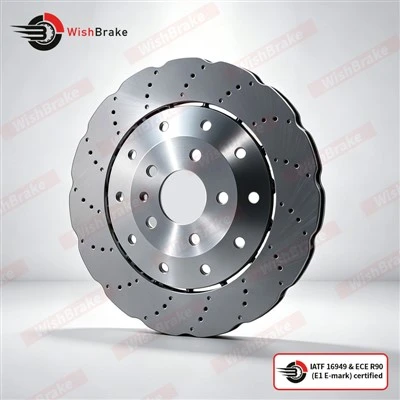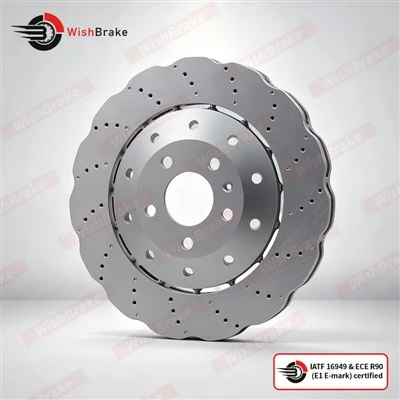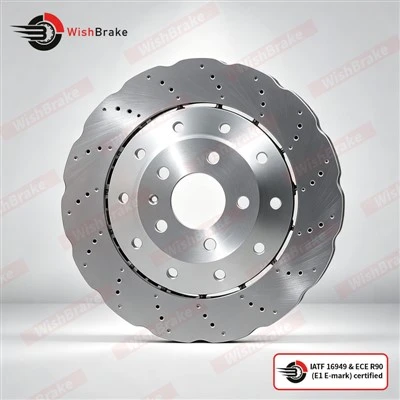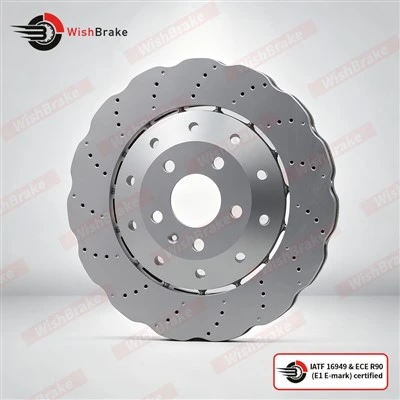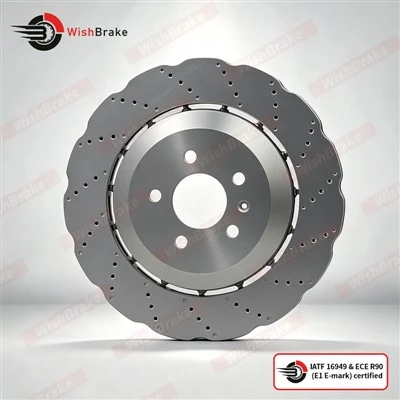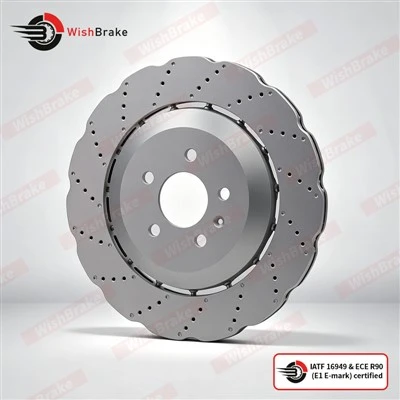

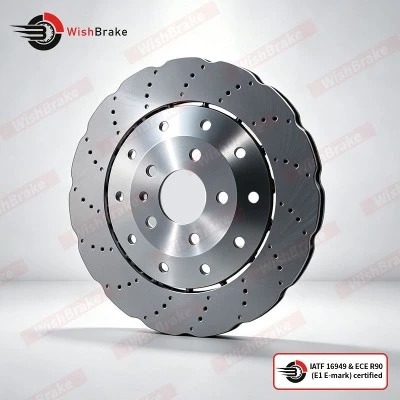
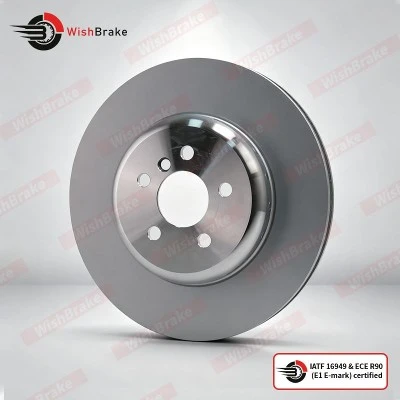
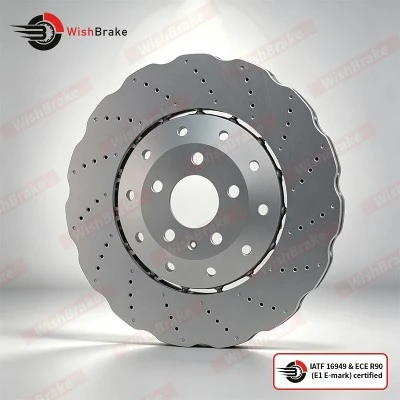
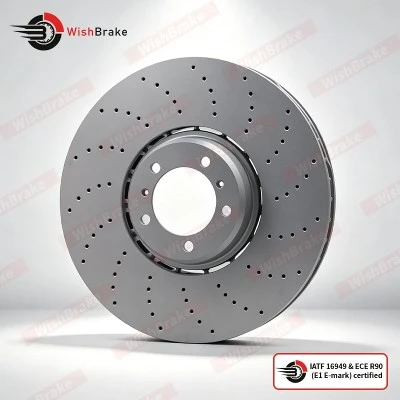
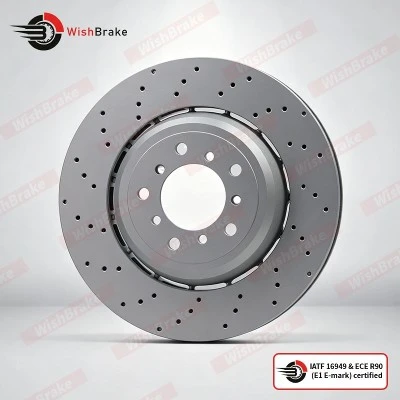
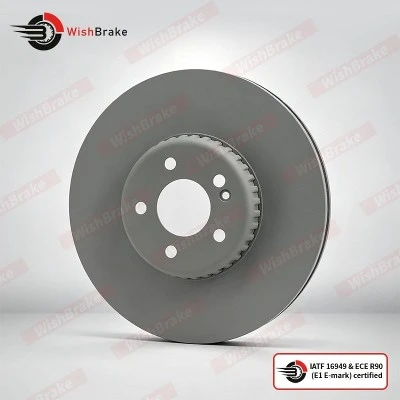
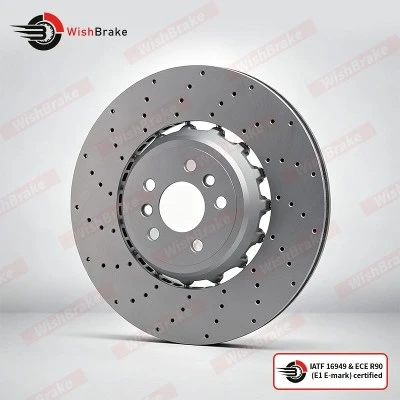
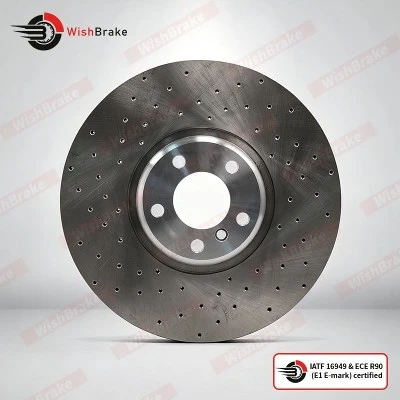
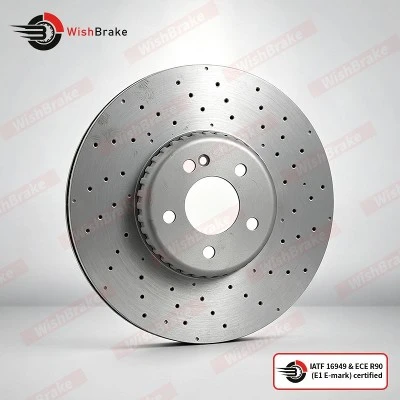
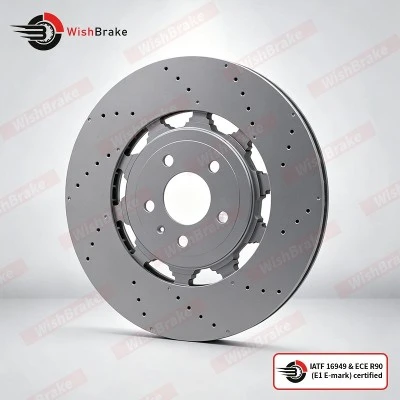
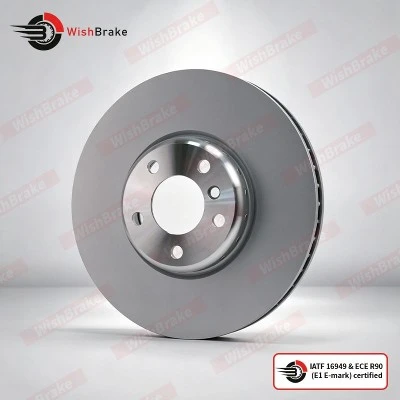
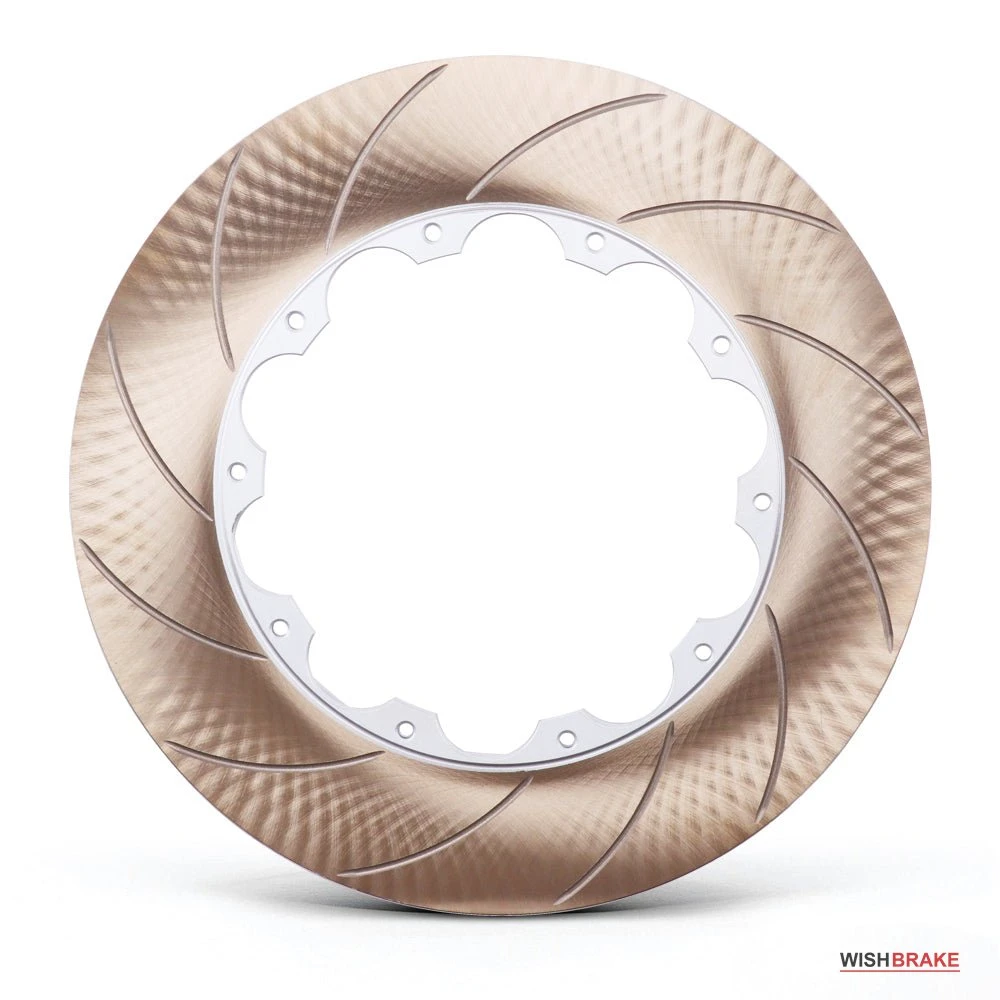
The operating principle of plum-shaped brake discs is essentially the same as that of standard disc brakes; they rely primarily on friction between the disc and the brake pads to decelerate the vehicle. When the driver presses the brake pedal, the braking system generates hydraulic pressure or actuating force, causing the brake caliper to press the pads against the disc. This creates frictional resistance, thereby slowing the vehicle down.
During braking, the vehicle's kinetic energy is converted into thermal energy, causing the temperatures of both the brake disc and the pads to rise. Consequently, brake discs require not only sufficient mechanical strength but also excellent heat resistance, resistance to thermal fatigue, and stable frictional performance.
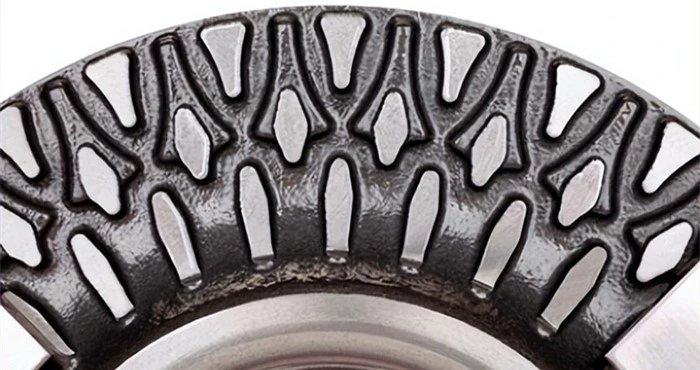
While the distinctive plum-like shape alters the geometry of the disc's outer edge, its actual heat dissipation and braking effectiveness do not depend solely on this shape. Factors such as disc thickness, material composition, ventilation design, the quality of the friction surface finish, and compatibility with the brake pads all influence overall braking performance.
In daily driving, the braking system must handle various conditions, including frequent braking, continuous downhill driving, and emergency stops. Proper selection of plum-shaped brake discs, combined with correct installation and a proper break-in period, is essential for maintaining stable braking system operation. It is important to note that a unique shape does not necessarily guarantee a shorter braking distance; actual performance should be evaluated based on product test data and specific compatibility requirements.